History of the OR&W
The Ohio River & Western Railroad (OR&W) was a 3‑foot narrow‑gauge line that operated across southeastern Ohio from the 1870s until 1931. Stretching from Zanesville to the Ohio River at Bellaire, the OR&W served small towns, farms, coal mines, and industries that depended on rail service to reach the outside world.
OR&W History at a Glance
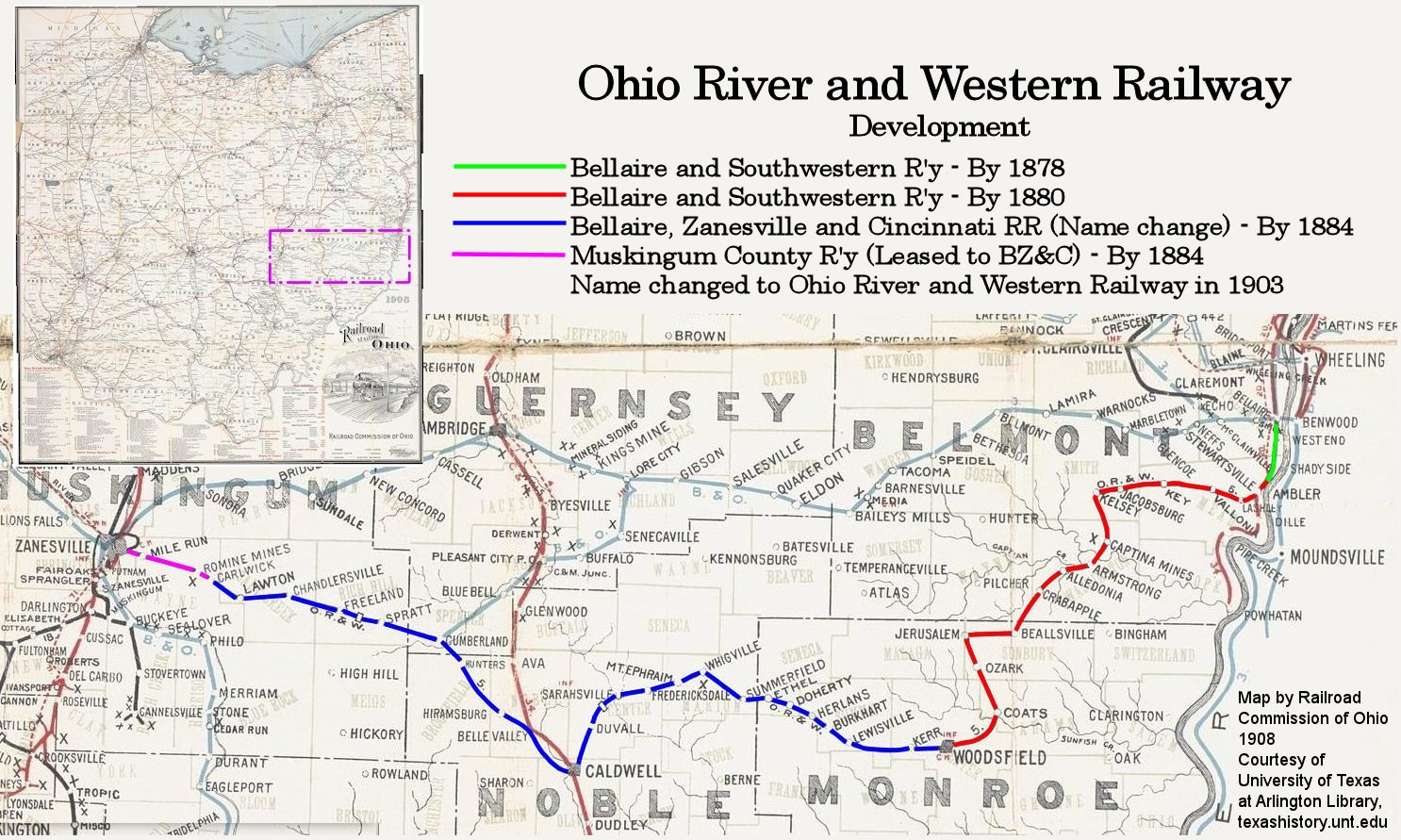
A Railroad That Connected Communities
The OR&W was more than a transportation system — it was a lifeline. Its trains carried passengers, livestock, coal, mail, and manufactured goods through the hills of Muskingum, Noble, Monroe, and Belmont Counties.
The End of the Line
By the late 1920s, improved highways and the rise of automobiles made the narrow‑gauge line increasingly obsolete. The OR&W ceased operations in 1931, and most of its equipment was scrapped.
Why Preservation Matters
The Friends of the Ohio River & Western Railroad work to save the last remaining pieces of this historic line.
Learn More
Explore our ongoing preservation work and discover how you can help protect this important part of Ohio’s railroad heritage.